5 things to know about probiotics and the gut microbiome
5 things to know about probiotics and the gut microbiome
Scientists are taking more and more interest in our microbiomes, or the colony of trillions of bacteria that live in our gut.
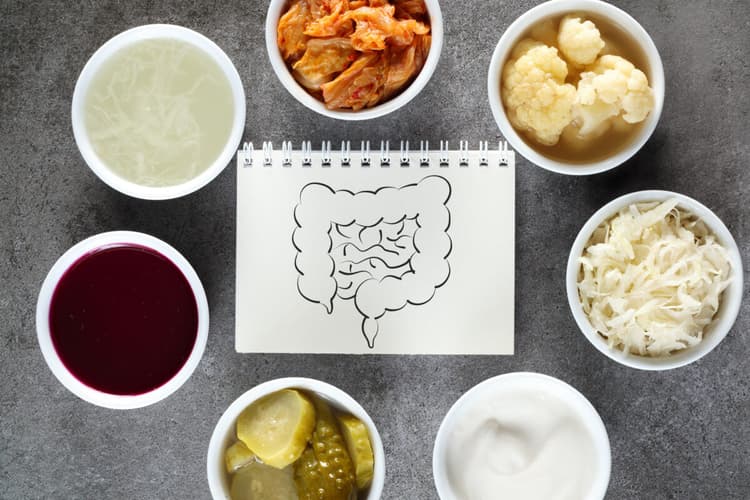
Probiotics are live microorganisms of many different strains. They come in many different combinations and doses, and they can be consumed through fermented foods and drinks, such as live yoghurt, kefir, tempeh, kombucha and kimchi, or through supplements.
Prebiotics, meanwhile, are the soluble fibre that these microorganisms feed on – which is why the two are so often talked about together.
So, what do we know about them? Here are 5 things worth knowing.
What do gut bacteria do?
Some types of fibre, such as inulin, can’t be broken down by our own enzymes, so they travel on to the large intestine, where most of the bacteria in our microbiome live.
There, the bacteria ferment the fibre into short-chain fatty acids, such as butyrate, propionate and acetate.(1)
Besides short-chain fatty acids, the bacteria in our bodies also produce some vitamins, such as vitamin K and vitamins B5 and B12.(2)
Every serving of our Organic Plant-Based Protein contains both inulin and 1bn CFU of Bacillus coagulans – we’ll explain why we chose these two in the last section.
Everyone’s microbiome is different

The gut microbiome is made up of hundreds of species of bacteria, and the proportions of each vary from person to person – no two people have exactly the same microbiome.
Among the bacteria commonly found in people’s guts are the Firmicutes and Bacteroides groups, and the balance between them depends on many factors, including diet, age, lifestyle and environment.
Researchers are still studying what these differences mean, and there are plenty of questions still waiting for answers.
What are researchers studying?
The microbiome is one of the fastest-growing areas of nutrition research, and researchers around the world are studying its links with health from many different angles.
Most of this research is still at an early stage, and the results often depend on the strain of microorganism, the dose and the individual. So we’ll stick to what we know for sure – what’s in our shake, and why.
Probiotics in everyday food
Many fermented foods naturally contain live microorganisms. Yoghurt and kefir are made from milk fermented with bacteria (kefir uses yeast too), tempeh is made from soybeans fermented with a mould, kombucha is fermented tea, and kimchi is Korean fermented vegetables.
But not every fermented food still has live microorganisms in it – pasteurising or cooking can kill them. If you want to know, check the label for “live cultures”.
Why we put Bacillus coagulans and inulin in Heyday
We chose Bacillus coagulans because it forms spores – a hardy, dormant state – which suits a dry powder with a long shelf life like ours.
Every serving of our Organic Plant-Based Protein contains 1bn CFU of Bacillus coagulans, whichever flavour you choose. (CFU stands for colony-forming units, the standard way of counting live microorganisms.)
We pair it with inulin, a soluble fibre found in many plants, such as chicory root, onions, garlic and bananas. Inulin is a prebiotic – a fibre that microorganisms feed on – and it has a lightly sweet taste of its own.
All of this comes in a shake that tastes like a milkshake, with no added sugar and made without dairy or soy ingredients.